


Historical Document Transcription
Turn archival documents, manuscripts, and primary sources into searchable transcripts with original wording and uncertain readings preserved.
- Faithful archival and manuscript transcription
- Marks uncertain historical readings
- Indexes visible dates, places, people & source metadata
Upload your document to get started
Drag and drop files here

How Historical Transcription Works
Upload
Drag & drop or click to upload your file. Supports JPG, JPEG, PNG, WEBP, PDF.
Process
Our AI analyzes your document and extracts the relevant data automatically.
Download
Review the results and download as Transcript / Archival metadata.
Who Uses Historical Document Transcription?
Trusted by professionals across industries to save time and reduce errors
Archives & Libraries
Create searchable first-pass transcripts and metadata for archival collections and finding aids.
Historical Manuscripts
Digitize letters, journals, registers, minutes, and handwritten primary sources.
Researchers & Historians
Extract reviewable names, dates, places, and passages for analysis and citation.
Volunteer Transcription
Give volunteers an uncertainty-marked draft to verify against the original scan.
Collection Processing
Process related pages in source order and create consistent searchable text.
Powerful Features
Everything you need for fast, accurate document processing
Faithful Transcript
Preserves original spelling, wording, abbreviations, punctuation, and page order
Visible Uncertainty
Marks ambiguous words instead of presenting guesses as established text
Archival Metadata
Indexes visible dates, places, people, organizations, document type, and script
Primary Sources
Handles manuscripts, letters, registers, journals, minutes, and mixed historical material
Research Exports
Review and export the result as Word, text, JSON, or CSV
Historical Sources This Workflow Handles
One archival workflow for varied primary sources—not a page limited to one handwriting style.
Letters & Correspondence
Preserve salutations, dates, names, paragraphs, postscripts, and source wording.
Manuscripts & Journals
Keep page sequence, headings, entries, marginal notes, and visible corrections.
Institutional Records
Transcribe registers, minutes, ledgers, reports, and archival forms.
Faded or Damaged Sources
Attempt faint passages while exposing words that require human verification.
Before vs After
Before
Unsearchable archival scans, inconsistent volunteer notes, and silent guesses in difficult passages.
After
A faithful searchable transcript with source metadata and every uncertain reading exposed for review.
Transcription for Historical Collections
Preserve the source before interpreting it
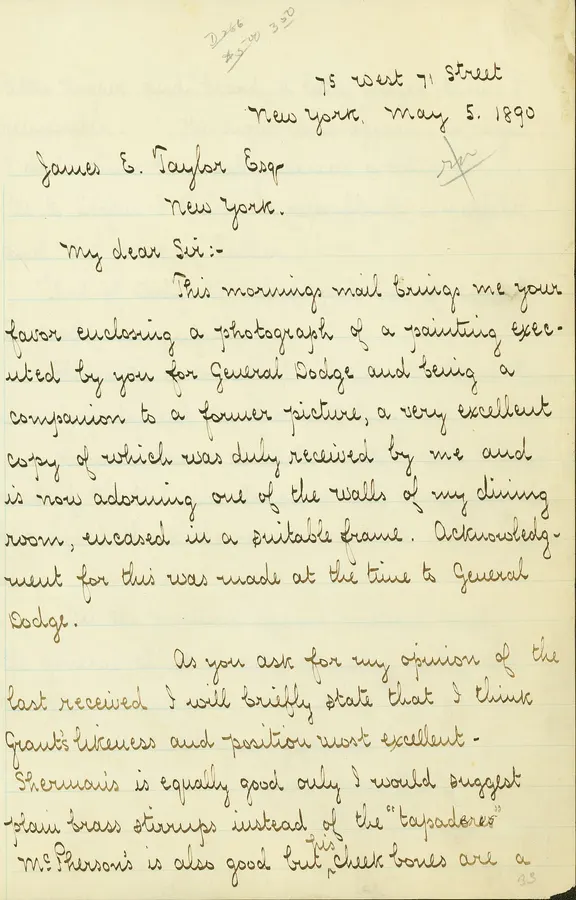
The historical profile creates a faithful transcript before producing archival metadata. It preserves original spelling, abbreviations, punctuation, page order, and meaningful line breaks rather than silently modernizing the source.
Make uncertainty reviewable
Faded ink, damaged paper, unfamiliar letterforms, marginal notes, and overwritten passages can remain ambiguous. Uncertain readings are marked as [?word] or [?] so a researcher can compare them with the original.
Build a searchable collection
Alongside the transcript, the output indexes visible document type, dates, places, people, organizations, language, and writing style. Nothing absent from the source is inferred.
Historical Document Transcription FAQ
Common questions about using Historical Document Transcription
Historical document transcription converts an archival source into searchable typed text while preserving its original wording, spelling, abbreviations, punctuation, and document structure.
Related Tools
Handwriting & OCR
Turn handwriting, scans, and difficult images into editable text.
Cursive Translator
Upload a photo, scan, or PDF of real cursive handwriting and receive faithful, editable typed text.
Genealogy Records
Transcribe genealogy records and organize visible names, dates, places, relationships, and events.
Historical Transcription is one of 17 document tools in DocuGenie
Skip paying for a separate app for every task. One DocuGenie subscription bundles handwriting OCR, image-to-text, PDF and Excel conversion, translation, summaries, and more - from $9/mo. Use your credits on whichever tool you need.